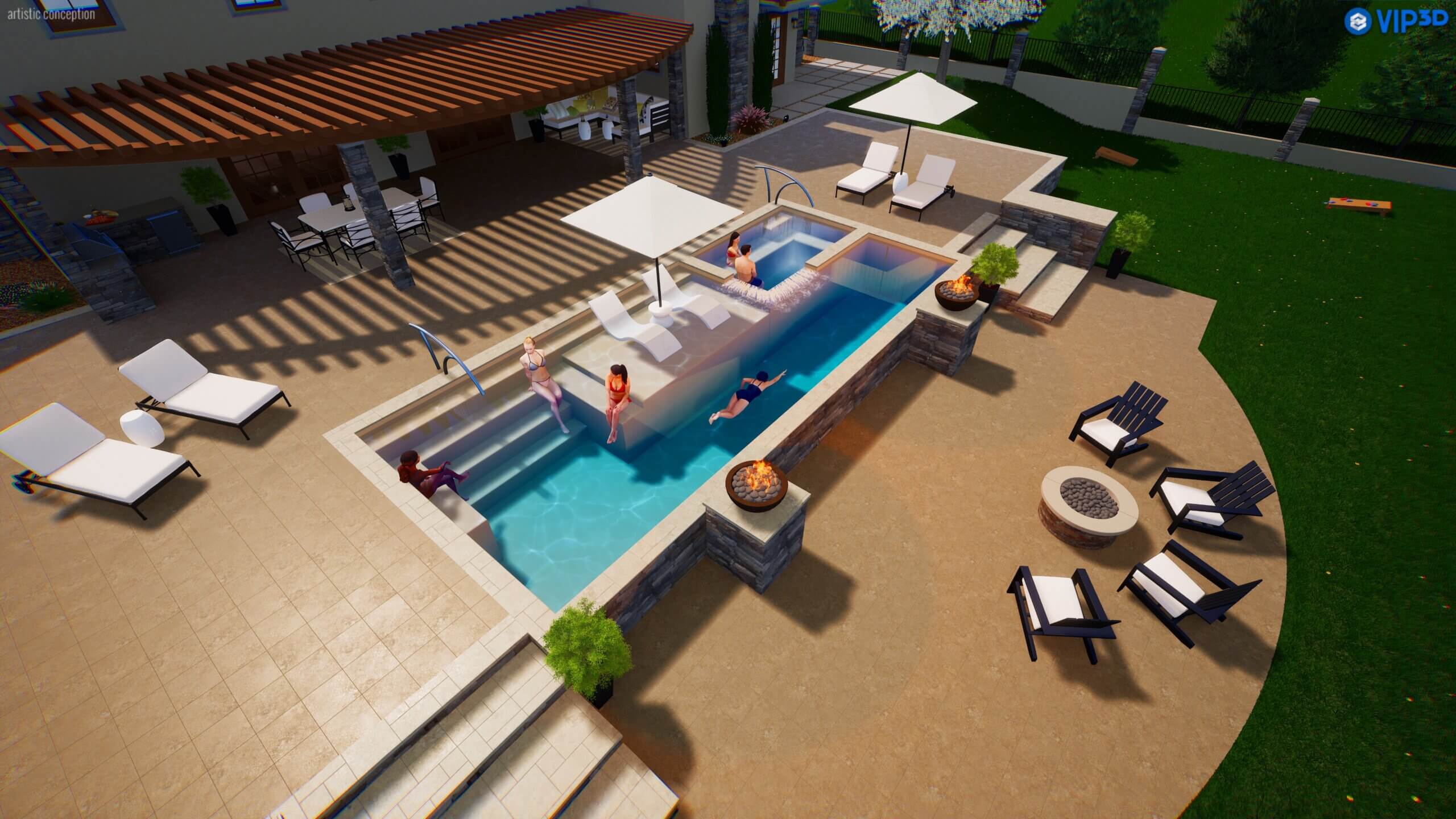
Pool Installation Timeline Week by Week
Expert guidance for Wisconsin pool owners
Installing a fiberglass pool is faster than most homeowners expect. While concrete pools take 3-6 months from excavation to swim-ready, a Thursday Pools fiberglass installation typically takes 6-8 weeks in Wisconsin— often less if weather cooperates. This detailed timeline breaks down what happens each week, what to expect from our crew, and how to prepare your backyard for installation.
Quick Timeline Summary
- Week 1: Site survey, permits, dig scheduled
- Week 2: Excavation and pool shell delivery/set
- Week 3-4: Plumbing, electrical, backfill, equipment installation
- Week 5-7: Concrete decking, fencing, final grading
- Week 8: Pool fill, water balance, final walkthrough—you're swimming!
Pre-Installation: Week 0 (Before Dig Date)
Site Survey and Design Consultation
Before any digging begins, we conduct a thorough site survey of your backyard. Our team measures setbacks, identifies underground utilities (water, gas, electric, sewer), checks soil conditions, and confirms drainage patterns. We also verify access—can we fit excavation equipment through your side yard? Do we need to remove a fence section temporarily?
During this phase, you'll finalize your pool model, placement, and equipment selections. We'll stake out the exact pool location so you can visualize size and orientation. This is your last chance to make changes before we order your Thursday Pools shell from the factory in Indiana.
Permits and Utility Locates
We handle all permit applications with your local municipality. Wisconsin cities typically require a building permit, electrical permit, and sometimes a fencing permit. Most permits are approved within 1-2 weeks. We also call Diggers Hotline to mark underground utilities—this is mandatory in Wisconsin and prevents costly (and dangerous) utility strikes during excavation.
Typical permit costs in Wisconsin: $200-$500 depending on city and pool size. These fees are included in our standard installation quotes.
Week 1: Excavation and Pool Shell Delivery
Day 1-2: Excavation
Excavation day is the most dramatic part of the process. Our excavation crew arrives with a track excavator and dump trucks. We dig the hole 12-18 inches larger than the pool shell dimensions to allow room for backfill and plumbing. The excavated soil is hauled away—typical pools generate 80-120 tons of dirt, which we recycle at approved fill sites.
For a typical 40' x 16' pool, excavation takes 1-2 days depending on soil conditions. Sandy soil digs fast; clay or rock takes longer. We over-excavate by 8-12 inches and install a compacted gravel base to ensure proper drainage and prevent settling.
Day 3: Gravel Base and Leveling
Once the hole is dug, we install 6-8 inches of crushed gravel across the bottom. This gravel base serves three purposes: drainage, frost protection, and a stable foundation. We use laser levels to ensure the base is perfectly flat—fiberglass pools must be level within 1 inch over 40 feet to prevent stress on the shell.
The gravel is compacted in 2-inch lifts using a plate compactor. This step is critical—poor compaction causes settling, which can crack plumbing lines or stress the pool shell over time.
Day 4: Pool Shell Delivery and Set
This is the most exciting day of your project. Your Thursday Pools fiberglass shell is delivered on a flatbed truck from Indiana. The shell is lifted by crane and carefully lowered into the excavated hole. Our crew guides it into position using ropes and hand signals—precision is everything.
Once the shell is in the hole, we check level in all directions, make micro-adjustments, and temporarily brace the pool to hold it in position. The entire set process takes 2-4 hours. By the end of Day 4, your pool is in the ground and you can finally see it in your backyard.
Week 2-3: Plumbing, Electrical, and Backfill
Plumbing Rough-In
With the pool shell set, our plumbing crew installs all underground pipes: main drains, skimmer lines, return jets, and any add-on features like deck jets or spillover spas. We use Schedule 40 PVC rated for underground burial and Wisconsin frost conditions.
All plumbing is pressure-tested before backfilling—we pump air into the lines and check for leaks. If any connections fail the test, we fix them before they're buried. This is your quality assurance that the system is watertight.
Typical plumbing timeline: 2-3 days for a standard pool, 4-5 days if you're adding water features, spa jets, or in-floor cleaning systems.
Electrical Conduit and Rough-In
While plumbing is happening, our electrician runs conduit from the house electrical panel to the pool equipment pad. Wisconsin code requires all pool equipment to be on a dedicated circuit with GFCI protection. We typically install a 50-amp or 60-amp subpanel near the equipment pad to handle the pump, heater, automation system, and lights.
Conduit is buried 18-24 inches deep and routed away from the pool shell to avoid future conflicts. Wiring is not pulled through conduit until the equipment pad is poured—this prevents damage during backfill.
Backfill and Compaction
Once plumbing and electrical rough-ins pass inspection, we begin backfilling around the pool shell. We use crushed gravel or pea gravel—never native soil—because it drains freely and doesn't retain water against the shell. Backfill is placed in 6-inch lifts and compacted with a plate compactor.
Here's the critical part: as we backfill, we simultaneously fill the pool with water. The water weight inside the shell counteracts the pressure from backfill outside the shell, preventing the walls from bowing inward. This is why fiberglass pools must be backfilled carefully—rushing this step can cause structural damage.
Backfill takes 2-3 days and requires constant monitoring. By the end of Week 3, the pool shell is fully supported, the plumbing is buried, and we're ready to install equipment.
Week 4: Equipment Installation and Startup
Equipment Pad
We pour a concrete equipment pad (typically 6' x 8') near the pool to mount the pump, filter, heater, and automation system. The pad is poured on compacted gravel and reinforced with rebar or wire mesh. In Wisconsin, we pour the pad 4-6 inches thick to handle freeze/thaw cycles.
The pad takes 3-5 days to cure before we can set equipment. During this time, we finalize electrical wiring and plumbing connections.
Equipment Setup
Once the pad is cured, we install your pool equipment:
- Variable-speed pump: Energy-efficient and required by Wisconsin code for new pools
- Cartridge or sand filter: Sized for your pool volume and turnover rate
- Heater (gas or heat pump): Optional but highly recommended for Wisconsin's short season
- Salt system or UV sanitizer: If you're going low-chlorine
- Automation system: WiFi-enabled control for pump, heater, lights, and cleaners
Our electrician pulls wire through the conduit, connects equipment to the subpanel, and tests all circuits. Plumbing connections are glued, unions are installed for future serviceability, and the system is filled and tested. We run the pump for 24 hours to check for leaks, proper flow, and filtration performance.
Week 5-7: Concrete Decking and Fencing
Decking Prep and Forms
With the pool shell and equipment complete, we shift to decking. Most Wisconsin pools use poured concrete or stamped concrete for the pool deck. We excavate around the pool perimeter, install a compacted gravel base, set forms to define the deck shape, and add rebar or wire mesh for reinforcement.
Typical deck dimensions: 4-6 feet around the pool perimeter, wider in entry/exit areas and near diving zones. We slope the deck 1/4 inch per foot away from the pool to prevent water from draining back into the pool.
Concrete Pour
Deck concrete is poured in a single day using a concrete truck or pump. We use 4,000 PSI concrete with air entrainment (required in Wisconsin for freeze/thaw resistance) and add fiber reinforcement for crack prevention.
If you're doing stamped or decorative concrete, we apply the pattern and color while the concrete is still wet. The deck is then covered and allowed to cure for 7-10 days before heavy use.
Fencing Installation
Wisconsin law requires a 4-foot fence around pools with self-closing, self-latching gates. We install aluminum or vinyl pool fencing that meets code. Fence posts are set in concrete and allowed to cure. Gates are adjusted to ensure they close and latch reliably—this is inspected by the city before final approval.
Week 8: Final Grading, Fill, and Startup
Landscaping and Final Grading
With hardscaping complete, we restore your yard. Topsoil is spread, graded away from the pool, and seeded or sodded. Downspouts and drainage paths are adjusted to keep water away from the pool area. Any temporary damage to lawns or garden beds is repaired.
Pool Fill and Water Balancing
If the pool isn't already filled from the backfill process, we top it off with a garden hose or water truck. A 40' x 16' pool holds approximately 24,000 gallons—expect 12-24 hours of fill time depending on your water pressure.
Once full, we test and balance the water chemistry:
- pH: 7.4-7.6
- Total Alkalinity: 80-120 ppm
- Calcium Hardness: 200-400 ppm
- Free Chlorine: 2-4 ppm
We add startup chemicals, run the filter system for 24 hours, and retest. Your pool is now swim-ready.
Final Walkthrough and Training
On your final walkthrough, we walk you through your entire system: how to operate the pump, set the heater, clean the filter, add chemicals, and troubleshoot common issues. We provide a startup chemical kit and a maintenance guide specific to your equipment.
We also schedule your city final inspection to close out permits. Once the inspector signs off, your pool is officially complete and you're ready for your first swim.
What Can Delay the Timeline?
Weather
Wisconsin weather is unpredictable. Heavy rain delays excavation and concrete pours. We can't pour decking if rain is forecasted within 48 hours, and we can't backfill in saturated soil. Most projects experience 1-2 weather delays—this is normal and built into our 6-8 week estimate.
Permit Delays
Some Wisconsin cities take longer to process permits, especially during peak construction season (May-July). If permits are delayed, excavation is pushed back. We stay in contact with the city and keep you updated.
Underground Surprises
Occasionally we encounter unexpected conditions: unmarked utilities, buried concrete slabs, high groundwater, or large boulders. These require extra time to address safely. We notify you immediately if we find anything unusual.
Your Role as the Homeowner
To keep the project on schedule, here's what we need from you:
- Clear access: Ensure side yard or backyard gates are open and clear of obstacles
- Pets secured: Dogs and excavators don't mix—keep pets indoors on work days
- Utility coordination: If you have irrigation, landscape lighting, or buried cables, mark them in advance
- Decision timelines: Finalize selections (coping, decking, fencing) by Week 3 to avoid delays
- Payment schedule: We operate on a draw schedule—payments are due at specific milestones (dig, set, equipment, final)
What's the Fastest We've Completed a Pool?
Our record is 4 weeks from excavation to swim-ready—achieved in perfect weather with all permits in hand and zero underground surprises. That's not typical, but it shows what's possible when everything aligns. Most Wisconsin pools take 6-8 weeks, which is still 3-4 times faster than concrete.
Ready to Start Your Pool Project?
Get transparent pricing and a detailed project timeline with our interactive pool estimator. No surprises, no hidden fees—just real numbers and realistic expectations.